

What Makes A High Quality Chicken Bone Broth
What Makes a High-Quality Chicken Broth?
Not all chicken bone broths are equal!
A high-quality chicken broth begins with real bones and connective tissue that are slowly simmered for many hours to extract collagen, gelatine and naturally occurring nutrients.
Made with clean, whole-food ingredients and traditional cooking methods, a properly prepared broth becomes far more than a simple stock. It delivers a concentrated source of structural proteins and amino acids that help support joints, skin integrity, gut health and the body’s connective tissue network.
In addition, the warm, mineral-rich broth can contribute to hydration, provide gentle nourishment during illness or recovery, and supply nutrients that support immune resilience and tissue repair.
So, what exactly makes a chicken bone broth truly high quality?
It All Starts with the Right Chicken
The foundation of any bone broth is the bones themselves. High-quality chicken bone broth begins with healthy birds raised in good conditions.
Free-range chickens typically have stronger bones and connective tissues because they move naturally and grow at a slower pace than industrially-raised poultry. This matters because the nutrients in bone broth come primarily from collagen-rich connective tissue and cartilage.
If bones are poor quality, no cooking process can compensate for that.
Food for Thought: In traditional kitchens, the rule was simple: the better the animal lived, the better the broth it produced.
Traditional Slow Simmering
The hallmark of authentic bone broth is time.
Traditional broths are simmered slowly for many hours, allowing the collagen in bones and connective tissue to break down into gelatine and amino acids. This slow extraction process releases the nutrients locked inside the bones.
Commercially manufactured stock products often skip this process, relying on flavourings or extracts instead of long cooking.
High-quality broth is:
· Slow simmered
· Cooked long enough to extract collagen
· Rich in natural flavour and nutrients
This traditional cooking method allows the broth to naturally release collagen, minerals and flavours into the liquid.
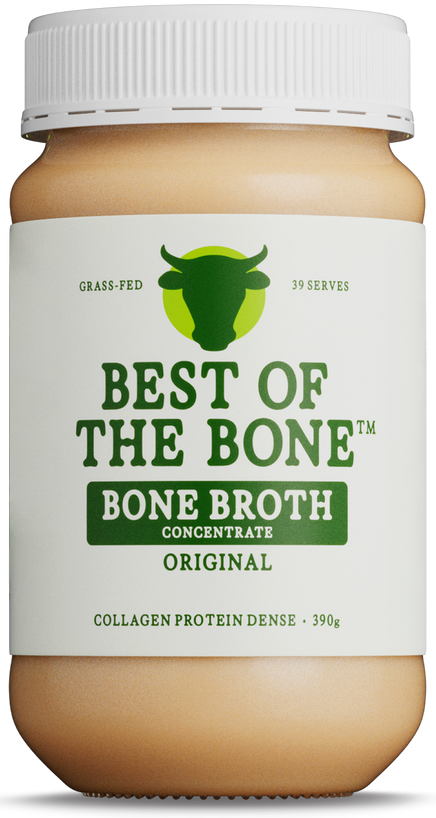
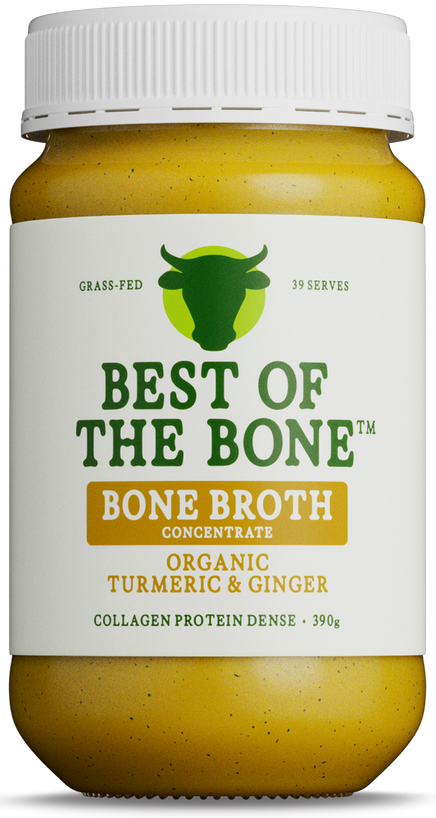
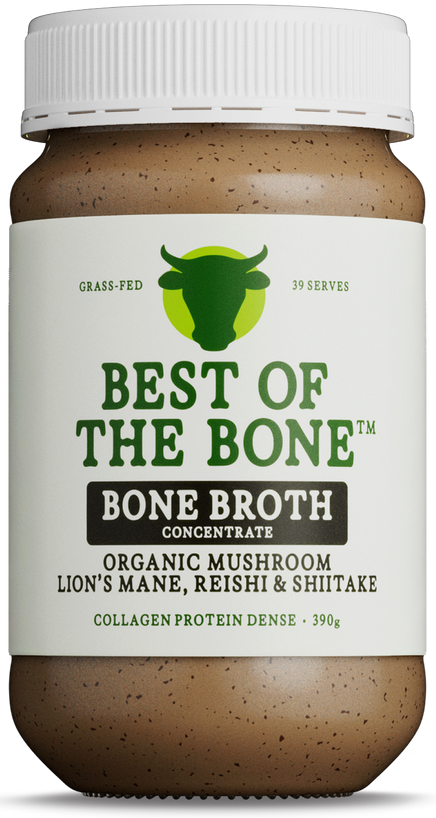
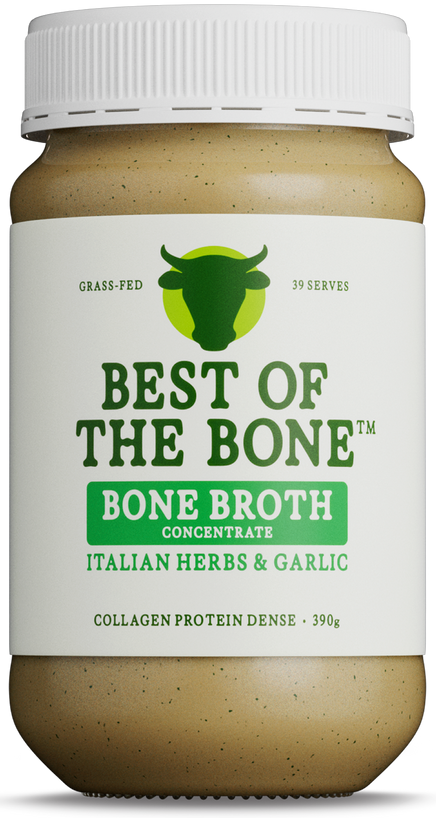
Food for Thought: A well-made chicken bone broth should lightly gel when cooled. This natural thickening is a simple kitchen sign that collagen has been successfully extracted. Concentrate this further and the gelatine becomes increasingly dense, transforming the broth into a thick, nutrient-rich paste.
High Collagen Content
One of the defining nutritional features of bone broth is collagen.
Collagen is the most abundant structural protein in the human body. It forms the framework of skin, joints, bones, tendons, ligaments and connective tissue.
When bones are simmered slowly, collagen breaks down into gelatine and collagen peptides, making it easier for the body to absorb.
A high-quality chicken bone broth will contain a meaningful amount of collagen breaks down into gelatine and collagen peptides, making it easier for the body to absorb. Levels of around 35% collagen protein indicate a dense extraction from bones and cartilage, providing a rich supply of structural amino acids such as:
· Glycine
· Proline
· Hydroxyproline
Each collagen type plays a different role:
· Type I collagen – structural support for skin, tendons and ligaments
· Type II collagen – primary collagen found in cartilage and joints
· Type III collagen – supports elasticity in skin, blood vessels and connective tissue
Chicken bone broth delivers these collagen types together in their natural matrix.
Food for Thought: Collagen makes up around 30% of the total protein in the human body and forms the structural framework of skin, cartilage, tendons and ligaments.
Rich in Functional Amino Acids
Beyond collagen itself, bone broth provides a range of amino acids that contribute to tissue maintenance and repair. Key amino acids released during slow simmering include:
Glycine
· Supports collagen synthesis
· Involved in glutathione production, the body’s master antioxidant
Proline
· Helps stabilise collagen fibres
· Importance for extracellular matrix structure
Hydroxyproline
· Unique to collagen
· Essential for maintaining collagen fibril integrity
These amino acids contribute to connective tissue health throughout the body.
Food for Thought: Glycine, one of the key amino acids in bone broth, plays a role in collagen formation, detoxification pathways and the production of glutathione, the body’s primary antioxidant.
Natural Occurring Nutrients Beyond Collagen
Of course, a good quality, well-prepared chicken bone broth contains much more than just collagen.
Slow simmering also releases a range of naturally occurring nutrients from bones and connective tissue, including:
· Calcium
· Magnesium
· Phosphorus
· Potassium
· Glycosaminoglycans
· Histidine dipeptides such as carnosine and anserine
These compounds contribute to the broader nutritional profile of chicken bone broth and reflect wider benefits of traditional whole-animal cooking practices.
Food for Thought: Traditional cuisines valued bone broths partly because they made use of parts of the animal that are rarely eaten today, unlocking nutrients stored in bones, cartilage and connective tissue.
Gentle and Easy to Digest
One reason chicken bone broth has been used during illness for centuries is its digestibility.
Compared to beef broth, chicken bone broth is typically lighter and lower in fat, making it easier to consume during recovery or digestive stress.
Gelatine in chicken bone broth has long been valued for its ability to support the gut lining, while amino acids like glycine may help regulate inflammatory pathways. Because of this, chicken bone broth is often used during periods of:
· Digestive stress
· Illness recovery
· Injury rehabilitation
· Increased physical demand
Food for Thought: Across many cultures, chicken broth has long been considered a restorative food during illness; warm, nourishing and easy for the body to absorb.
Clean, Whole-Food Ingredients
Another hallmark of a high-quality chicken bone broth is simplicity. When a broth relies on traditional ingredients and slow cooking rather than industrial shortcuts, it delivers the depth of flavour, nourishment and authenticity that bone broth has been valued for across generations. The best broths contain only whole-food ingredients, such as:
· Chicken bone broth concentrate
· Sea salt
· Organic vegetables
· Natural herbs and spices
The result is a broth that is both nutritionally dense and culinary versatile.
Food for Thought: The best chicken bone broths are simple. Bones, water, vegetables, herbs and time are all that is needed to produce a deeply flavoured, nourishing broth.
The Bottom Line
A truly high-quality chicken bone broth is defined by a few simple principles:
· Made from free-range chicken bones
· Slow-simmered traditionally to extract nutrients
· Rich in collagen protein
· Contains a natural matrix of Type I, II, II collagen
· Provides functional amino acids like glycine and proline
· Includes naturally occurring minerals and connective tissue compounds
· Uses clean, whole-food ingredients
In many ways, chicken bone broth represents a return to traditional food wisdom, using simple cooking techniques to unlock the nutrition hidden in bones and connective tissue.
 Author